
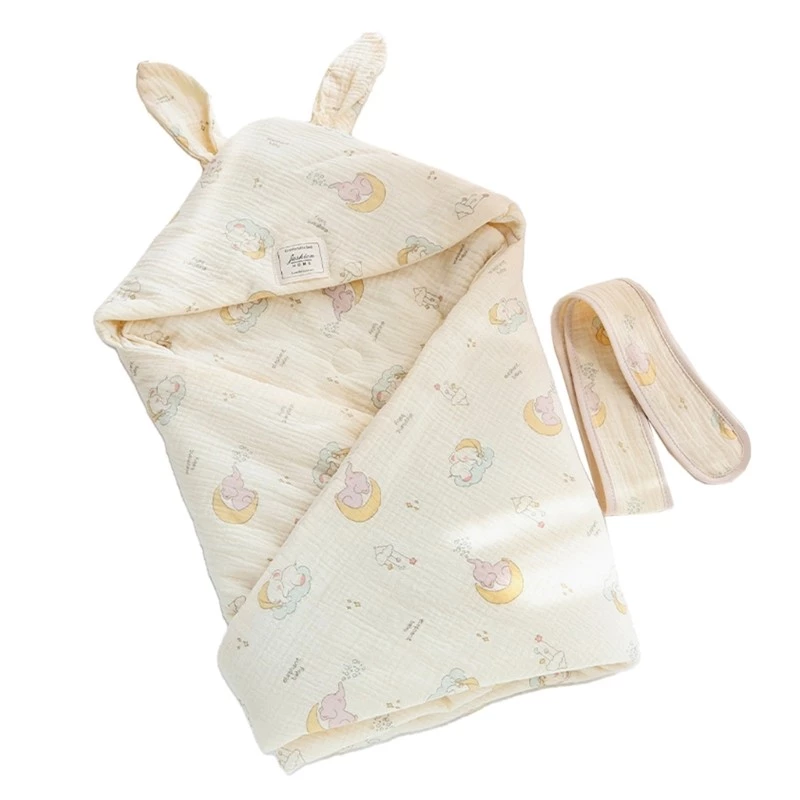
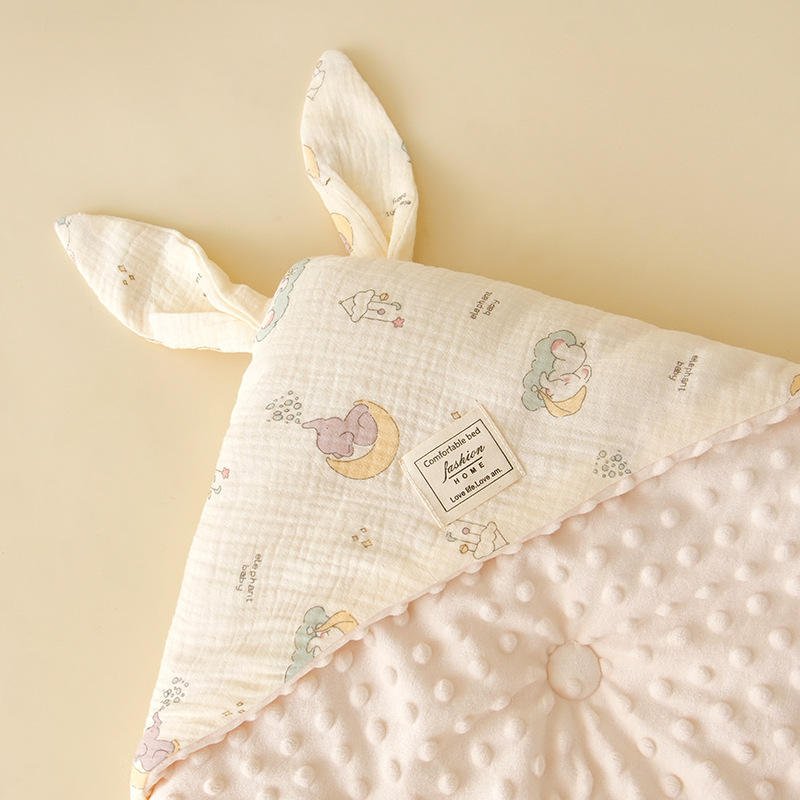
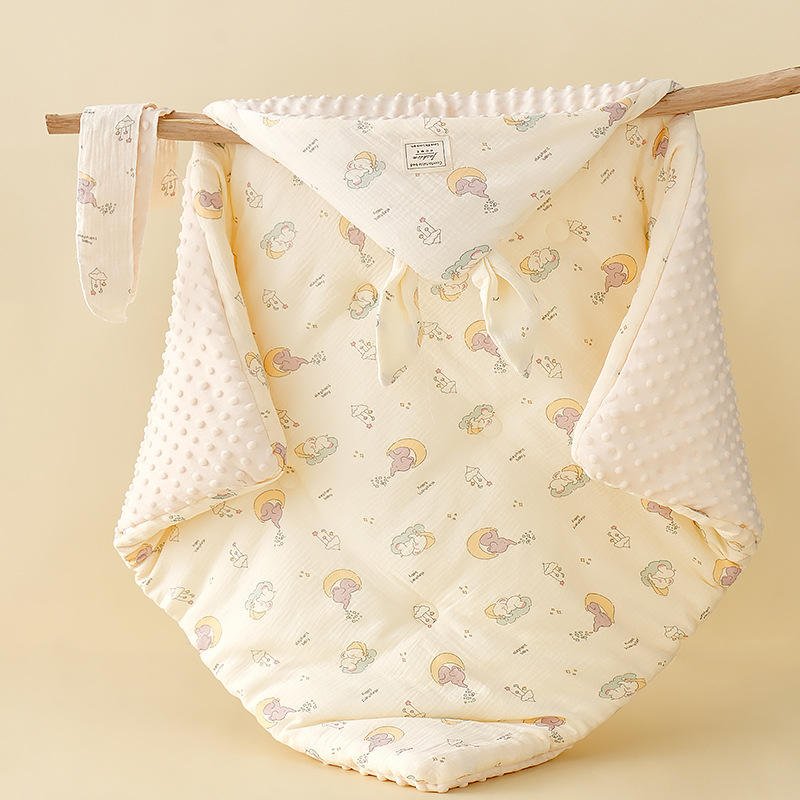
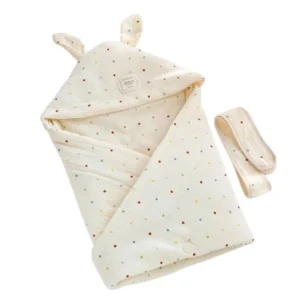
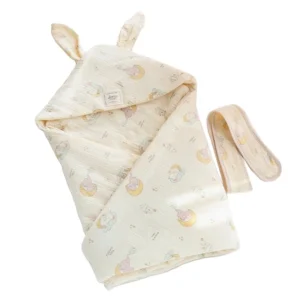
Wrap your little bundle of joy in comfort with Gudgudey’s Cloud Dream Swaddle Wrap, designed with a cozy hood and a secure tie-string to keep your newborn snug and safe from startle reflexes. Featuring a charming unisex elephant, clouds, & moon print, it is the perfect essential for both baby boys and girls.
Key Features:
Q: Is this Swaddle Wrap suitable for newborns?
A: Yes, the swaddle design is specifically made for newborns (0-3 Months).
Q: How do I use the cord/string?
A: Simply place the baby in the center with their head in the hood, fold the sides over, and use the string to gently tie the wrap securely.
Q: Is the Cloud Dream print suitable for boys or girls?
A: It is a 100% Unisex design.
Q: Is the fabric breathable?
A: Yes, we use soft, baby-friendly fabric that keeps the baby warm without causing overheating, making it perfect for Pakistan’s variable weather.
Everything Parents Need to Know About the Swaddle
Few things in early parenthood are quite as reassuring as a well-swaddled baby resting peacefully. That snug, bundled feeling — reminiscent of the womb — has a genuinely calming effect on most newborns, helping them sleep longer, cry less, and settle more easily. But for parents new to the practice, there’s a lot to learn: what to use, how to wrap, what size to choose, and where to find quality options in Pakistan. This guide covers it all, from the basics right through to the most practical shopping advice available.
What Is a Swaddle and Why Does It Matter?
At its simplest, a swaddle is a technique — and the cloth used to perform it — that involves wrapping a newborn snugly in fabric to restrict the startling arm movements that often wake babies from sleep. The Moro reflex, sometimes called the startle reflex, is one of the most common reasons newborns wake themselves up unexpectedly. A properly applied swaddle keeps the arms gently secured, allowing the baby to sleep more soundly without being disturbed by their own movements.
Beyond sleep, swaddling has been shown to soothe colicky babies, reduce crying episodes, and help newborns feel secure during transitions — like moving from being held to being laid down in a bassinet. It’s one of the oldest childcare practices in the world, and modern research continues to support what generations of parents have long known instinctively: a wrapped baby is often a calmer one.
🌙 Why it works: The snug sensation of a swaddle mimics the gentle pressure a baby experienced in the womb. For a newborn adjusting to the sudden spaciousness of the outside world, that familiar feeling of containment is deeply comforting — and it shows in how they sleep and settle.
The Newborn Swaddle: Getting It Right From the Start
The newborn swaddle is most commonly used in the first weeks and months of life, typically from birth until around three or four months — sometimes a little longer, depending on the individual baby. During this period, the startle reflex is at its strongest, and most babies respond very positively to being wrapped.
What makes swaddling in the newborn stage slightly tricky for first-time parents is getting the tension right. Too loose, and the wrap comes undone — which poses a safety risk. Too tight, and it can restrict healthy hip development. The sweet spot is a wrap that’s snug around the arms and upper body but leaves room for the legs to bend naturally and the hips to move freely. Most experts recommend the “hip-healthy” position, where the legs can fall into a natural frog-leg posture within the wrap.
A simple two-finger test works well for checking swaddle tension: if two fingers can fit comfortably between the wrap and the baby’s chest, the tightness is appropriate. The wrap should feel secure without compressing — the baby’s chest needs to be able to rise fully with every breath.
Understanding Swaddle Blankets: Options and Differences
Swaddle blankets are the most traditional and widely used option for wrapping newborns. They come in a generous square or rectangular shape — typically between 100cm and 120cm — which provides enough fabric to fold, tuck, and secure a newborn properly using the traditional diamond or square wrapping method.
The appeal of a blanket-style wrap is flexibility. The same piece of cloth that works as a swaddle can double as a light cover, a nursing cover, a pram liner, a play mat, or a burp cloth — making it one of the most genuinely multi-functional items in a baby’s early wardrobe. For parents who want value and versatility, blankets are hard to beat.
Traditional Blanket
Square or rectangular, generous sizing, doubles as a cover or nursing cloth. Maximum versatility.
Zip-Up Swaddle
Pre-formed shape with a zip closure. Fast to use, consistent tension, great for overnight changes.
Velcro Wrap
Secure, easy-to-apply closure. Ideal for parents new to swaddling who want a foolproof option.
Sleeping Bag Style
Arms-in or arms-out designs. Transitions babies from active swaddle to independent sleep.
How to Use a Swaddle Wrap Correctly
A swaddle wrap refers to the act of wrapping — and the piece of fabric used to do so. While the term is sometimes used interchangeably with “blanket,” a wrap typically implies a piece of cloth specifically designed and sized for swaddling, rather than a general-purpose blanket that also happens to be used for wrapping.
The classic wrapping technique involves five straightforward steps, and once mastered, takes less than a minute to execute:
Lay the fabric as a diamond
Place the swaddle on a flat surface in a diamond shape, then fold the top corner down about 15–20cm to create a straight edge at the top.
Position the baby
Lay the baby on their back with their shoulders aligned with the folded top edge. The head should rest above the fabric, not on it.
Wrap the first side
Hold the baby’s right arm gently against their body, then pull the left side of the fabric across the body and tuck it firmly under the back.
Fold up the bottom
Fold the bottom of the fabric up over the feet, leaving room for natural leg movement. Tuck any excess into the front of the wrap.
Complete the wrap
Bring the remaining right side of the fabric across the body and tuck it behind the baby’s left side. The baby should feel snug but not compressed.
Choosing the Right Swaddle Wrap for Newborn
Not every wrap is equally well-suited to the youngest babies. A swaddle wrap for newborn specifically should be soft enough for the most sensitive skin, sized appropriately for a small body, and made from a fabric that breathes well enough to prevent overheating. These three factors — softness, size, and breathability — are the non-negotiables when shopping for the newborn stage.
Seam placement matters too. Wraps with internal seams that press against a newborn’s skin can cause irritation over time, particularly around the arms and shoulders where the fabric is most snugly applied. The best options for this age are those with flat or minimal seaming and no rough labels or embellishments on the inner surface.
Swaddle Muslin: Why It Remains the Gold Standard
Among all the fabric options available, swaddle muslin consistently comes out on top in parent reviews, expert recommendations, and real-world experience. Muslin is a loosely woven cotton fabric with an open structure that allows air to flow freely through the weave — which is precisely why it’s so well-suited to wrapping a baby who needs to stay warm but not overheated.
What makes muslin particularly special for wrapping is how it behaves over time. Unlike tightly woven cotton that stays stiff, muslin gets noticeably softer with every single wash — meaning a well-used muslin wrap becomes an increasingly wonderful thing to touch. It also has a gentle stretch in the diagonal direction that makes it easier to achieve a snug, even wrap without creating uncomfortable pressure points.
Best for Summer
🌾 Muslin Cotton
Breathable, lightweight, and gets softer with every wash. The most widely recommended fabric for newborn swaddling, particularly in warm climates like Pakistan.
All Season
🌿 Jersey Knit
Slightly heavier than muslin with a gentle stretch. Easier to wrap for beginners because the fabric naturally holds its shape during folding.
Best for Winter
❄️ Fleece / Velour
Warm and plush for cooler months. Best used as an outer layer wrap when temperatures drop significantly — always check that the baby isn’t overheating.
Premium Choice
🪷 Bamboo Blend
Silky soft with natural temperature-regulating and antibacterial properties. An excellent choice for babies with sensitive or reactive skin.
Swaddle Infant Techniques: Adapting as the Baby Grows
Swaddling works differently at different stages of infancy, and understanding how to adapt the technique as a baby grows makes the practice much more sustainable beyond the first few weeks. A swaddle infant technique for a two-week-old will look and feel different from one applied to a three-month-old — and that’s entirely appropriate.
Very young babies typically benefit from a fully contained wrap with both arms secured against the body. As they approach the two-to-three month mark, many babies begin showing signs of rolling or pushing against the wrap, which signals that it’s time to start transitioning. At this point, one-arm-out or arms-up positions offer a middle step between a full swaddle and independent sleep without wrapping.
🔄 Transition timing: The clearest signal that a baby is ready to stop being fully swaddled is when they consistently roll or attempt to roll while wrapped. Most paediatric sleep experts recommend transitioning out of a full swaddle by three to four months at the latest — and always before rolling becomes a regular occurrence.
Finding a Quality Swaddle Wrap in Pakistan
The availability of quality swaddling products in Pakistan has improved considerably over recent years. Parents searching for a swaddle wrap in Pakistan today will find a notably wider selection than was available even a few years ago — both through dedicated baby product retailers and via online platforms that deliver across the country.
Local brands have responded to growing demand by producing muslin and cotton wraps specifically designed for Pakistan’s climate — lightweight, breathable, and available in locally inspired prints and colour palettes. International brands are also increasingly accessible through online marketplaces, giving parents the option to compare local and imported options side by side before making a decision.
- Look for fabric content listed clearly — 100% cotton or muslin is the baseline standard
- Check the finished dimensions — a genuine swaddle wrap should be at least 100cm × 100cm
- Verify that the fabric is pre-washed or pre-shrunk to ensure accurate sizing after the first wash
- Check for double-stitched or flat-felled seams — these hold up far better over repeated washing
- For online purchases, review buyer feedback specifically about fabric softness and sizing accuracy
- Trusted sellers should have a clear return policy in case the fabric quality doesn’t meet expectations
The Baby Swaddle as a Calming and Sleep Tool
A well-executed baby swaddle does more than keep a little one warm — it actively contributes to better sleep patterns, reduced crying, and a calmer overall temperament in the early weeks. Research has consistently shown that swaddled newborns tend to sleep for longer stretches, wake less frequently during the night, and settle more quickly after waking compared to unswaddled babies.
The reason lies in the neurological state of a newborn. Their nervous system is still in active development, and external stimuli — sounds, light, even their own movements — can be overwhelming. A snug wrap reduces sensory input to a manageable level, giving an immature nervous system the calming buffer it needs to settle and rest.
❤️ Sleep safety reminder: A swaddled baby should always be placed on their back to sleep on a firm, flat surface. The sleeping environment should be free from loose bedding, pillows, or soft items. If a baby shows any ability to roll, the swaddle should be transitioned to an arms-out or sleeping bag style immediately.
Mastering the Newborn Swaddle Wrap Step by Step
A proper newborn swaddle wrap technique becomes second nature with practice, but in the early days it can feel deceptively complicated. The most common mistakes parents make are wrapping too loosely (so the wrap comes undone), wrapping the legs too tightly (which restricts healthy hip development), or using a fabric that’s too stiff or thick for the ambient temperature.
For parents who find traditional wrapping techniques tricky, there are several excellent structured alternatives — velcro swaddles, zip-up designs, and pre-formed wraps — that achieve the same result with less technique required. These products are particularly useful during overnight feeds when speed and simplicity matter most.
Swaddle With Blanket: Making It Work Beautifully
Learning to swaddle with blanket is a skill that stays with parents for the entire newborn stage — and it’s more versatile than any pre-formed product. A standard square blanket in the right fabric gives parents full control over tightness, positioning, and the specific wrapping style they prefer, without being constrained by the fixed shape of a structured product.
The key to success with a blanket wrap is choosing the right size. A blanket that’s too small doesn’t provide enough fabric to tuck and secure properly — resulting in a wrap that comes loose. One that’s too large creates excessive bulk that can shift during sleep. The ideal range for blanket swaddling is between 100cm × 100cm and 120cm × 120cm, which provides plenty of fabric for a secure wrap on babies from newborn through around four months.
Having three to four swaddle-quality blankets in rotation means there’s always a fresh, clean one available even if one or two are in the wash. Babies inevitably experience diaper leaks and spit-up incidents during wrapping — having spares on hand is simply good planning, not excessive preparation.
Wrapping Sheet and Its Cultural Significance
In Pakistan and across much of South Asia, the traditional wrapping sheet has been a central part of newborn care for generations. Long before the term “swaddle” entered common use in the region, families were wrapping their babies in soft muslin or cotton cloth — a practice passed down through grandmothers and aunts, rooted in the understanding that a snugly bundled baby is a comfortable, settled baby.
The modern equivalent retains all the warmth of that tradition while incorporating updated knowledge about safe wrapping techniques and breathable fabrics. Today’s families have access to wrapping cloths that are softer, better sized, and more thoughtfully designed than ever before — but the underlying wisdom that generations of Pakistani mothers practiced intuitively remains just as valid.
Why the Wrapping Sheet for Newborn Deserves Special Attention
The needs of a wrapping sheet for newborn are distinct from those of a general-purpose blanket or cloth. Newborn skin is exceptionally sensitive — far more reactive to rough textures, chemical residues from dyes, and temperature fluctuations than the skin of an older baby. The cloth that goes directly against a newborn’s skin needs to meet a higher standard of softness, purity, and breathability than is required for any other garment or accessory in the baby’s environment.
For this reason, wrapping cloths intended specifically for newborns are ideally made from organic cotton or chemical-free muslin, pre-washed at the factory to remove any residual processing chemicals, and available with a certification confirming they’re free from harmful dyes or finishing agents. These details matter most in the earliest weeks when a baby’s skin barrier is still developing and most vulnerable.
Wrapping Sheet Price in Pakistan: What to Expect
Understanding the wrapping sheet price in Pakistan across different market segments helps families plan their baby shopping budget realistically. Prices vary considerably depending on fabric quality, brand reputation, whether the product is locally made or imported, and whether it’s sold individually or as part of a set.
Mid-range locally produced muslin wraps consistently offer the best combination of quality and value for most Pakistani families. A good-quality local muslin in the 700–1,800 PKR range typically performs comparably to imported alternatives that cost two to three times as much — particularly after a few washes, when the fabric has softened fully.
Newborn Swaddle Size: A Practical Reference Guide
One of the most practical questions parents face when shopping is what newborn swaddle size to choose. Unlike clothing, where age and weight labels at least provide a starting point, swaddle sizing can seem less intuitive — particularly for parents who haven’t used one before and aren’t sure how the fabric translates to a fit on a real baby.
| Baby’s Age / Weight | Recommended Wrap Size | Notes |
|---|---|---|
| Newborn (up to 3.5 kg) | 100cm × 100cm | Minimum size for a secure wrap. Allows for safe tucking and overlap. |
| 0–3 Months (3.5–6 kg) | 100cm × 120cm | Versatile size that works across the early weeks |
| 3–6 Months (6–8 kg) | 120cm × 120cm | Larger babies or transition-stage wrapping |
| Structured / Velcro Swaddle | Check brand size guide | Usually available in Small (up to 4.5 kg) and Medium (4.5–7 kg) |
When in doubt, a slightly larger size is almost always the better choice. Extra fabric can always be neatly folded and tucked, but too-small fabric creates tension in the wrong places and doesn’t provide enough material to form a secure wrap. Buying in the standard 120cm × 120cm size covers the broadest range of ages and weights and offers the most longevity.
The Newborn Swaddle Sleeping Bag: A Natural Next Step
As babies grow and begin to resist the full arm-restriction of a traditional wrap, the newborn swaddle sleeping bag offers a seamless transition that preserves the benefits of swaddling while accommodating a baby’s growing need for movement. These products typically feature a zip-up design with arm pockets that can be positioned inside the garment (arms in, for younger babies) or removed from the pocket to allow free arm movement (arms out, for older babies approaching the roll stage).
The sleeping bag design also removes one of the safety concerns associated with loose blankets in a sleep environment: because the garment is fixed to the baby, there’s no risk of it shifting over the face or becoming loose during the night. This makes it a popular recommendation among paediatric sleep specialists as both a transitional swaddle and a longer-term sleep garment through the early months.
🌟 Why parents love the transition: The sleeping bag style doesn’t require any technique to apply — just zip and go. For exhausted parents managing overnight feeds in the dark, that simplicity is genuinely invaluable. And the consistent, familiar environment it creates helps babies understand that it’s sleep time, supporting the development of healthy sleep associations over time.
Choosing the Right Swaddle for Every Baby and Every Stage
There’s no single “best” swaddle for every baby — because every baby is different. Some newborns settle most easily in a snug blanket wrap; others do better in a structured velcro design that takes the guesswork out of tension and positioning. Some families prefer the minimalist simplicity of a good muslin square; others appreciate the thoughtful engineering of a zip-up sleeping bag. All of these approaches can work beautifully when the right product is chosen for the right baby at the right stage.
What stays constant across every option is the goal: a baby who feels safe, warm, and settled — and parents who feel confident and capable in how they’re caring for their newborn. A good swaddle contributes meaningfully to both of those things. It’s one of the smallest purchases in a baby’s early life, and one of the most consistently impactful.
For families in Pakistan, the good news is that the market has genuinely caught up with demand. Quality wraps in appropriate fabrics, at accessible price points, are available both in store and online — and there’s never been a better time to shop with confidence and knowledge.
Reviews
There are no reviews yet.